Predicting the 2026 Bristol Bay & Kodiak Salmon Runs
Bristol Bay's peak week moves more sockeye than most rivers see in a season. Where the data supports a real forecast for 2026, and where only the live count will do.
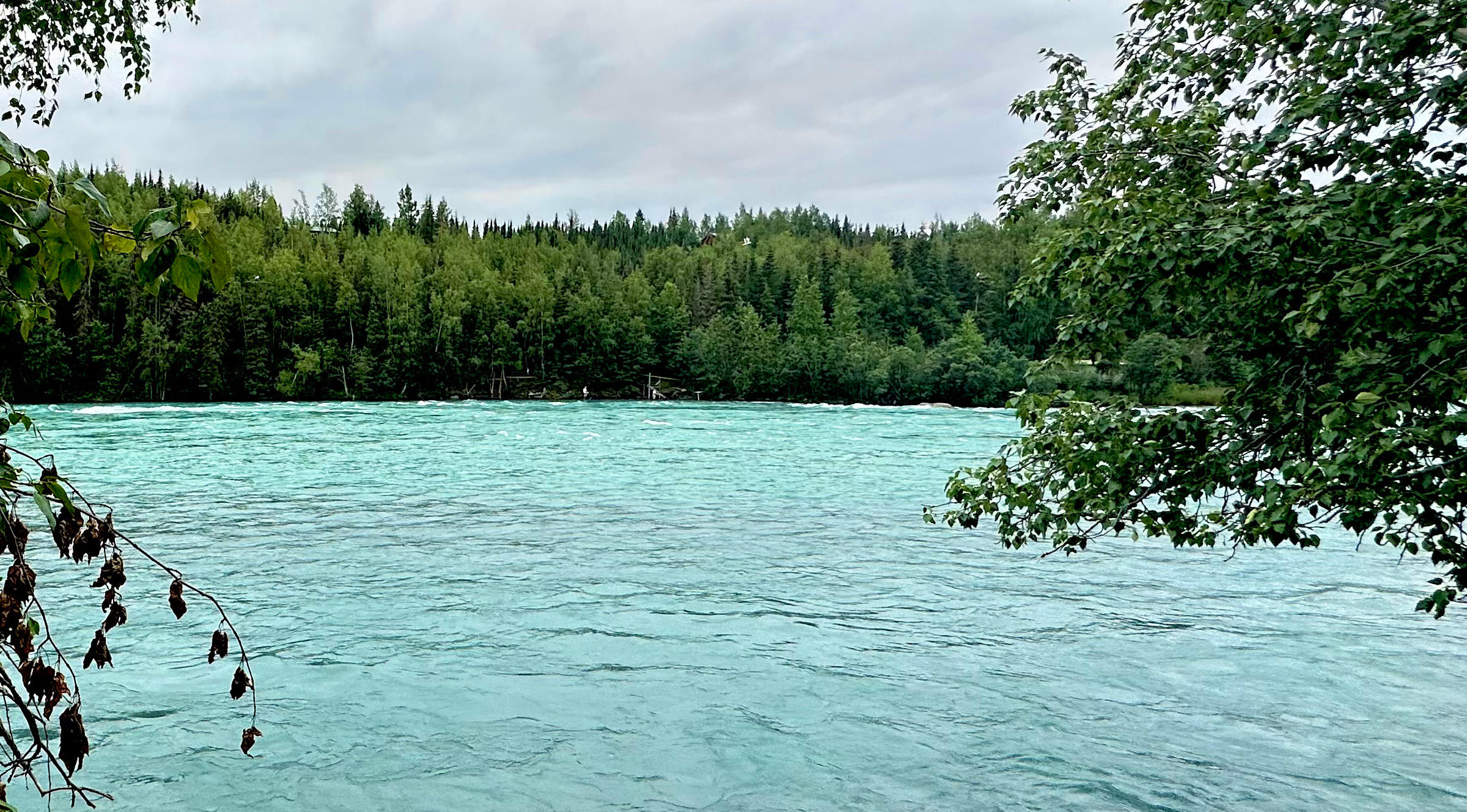
Bristol Bay and Kodiak Island sit at the heavy end of Alaska’s salmon map. Bristol Bay’s sockeye returns are measured in the millions, with peak weeks that move more fish in a few days than most rivers see in a season. Kodiak runs smaller in total volume but trades volume for variety — Chinook, coho, sockeye, and a powerful even-year pink cycle that completely changes the character of the fishing.
This post does two jobs. First, it pulls daily passage data for the major counted rivers in each region — Alagnak, Kvichak, and Naknek in Bristol Bay; Ayakulik and Dog Salmon on Kodiak — and turns it into concrete 2026 expectations: when each species’ run is likely to start, peak, and tail off. Second, it draws the honest line: where the data supports a real forecast, where it doesn’t, and where the only reliable signal is the live count. The first half is the seasonal playbook. The second half is where Salmon Finder (iOS : Android) lives.
How We Read the Numbers
For each species at each river, we computed four timing anchors per year of available data: the day on which 5% of the annual run had passed (season start), 50% (midpoint), and 85% (late-season threshold), plus the consecutive 10-day window with the largest total passage. On Bristol Bay sockeye and Kodiak pinks, the peak 10-day window frequently delivers 40–60% of the entire season’s fish. Show up the wrong week and you’ve fished a different season.
We weight lifecycle analogs over linear trend. Sockeye return on 4- and 5-year cycles, Chinook and coho on 3- to 5-year cycles, pinks on a strict 2-year cycle. For 2026, that means the most informative comparison years are 2022 (4-year), 2021 (5-year), and 2023 (3-year) — and for pinks, the most recent even years (2024, 2022, 2020, 2018) carry far more weight than any odd year ever could.
We separate timing confidence from magnitude confidence. Timing — when the fish show — is usually fairly stable. Magnitude — how many actually arrive — is much harder, and we are intentionally conservative.
Day-to-date convention: this analysis treats the spreadsheet’s day_1 as May 1, day_31 as May 31, day_32 as June 1, and so on through day_123 = August 31. If the source file uses day_0 = May 1, every date below shifts one day later — a small adjustment for planning.
One important call-out about this dataset. The Bristol Bay sockeye records in the analyzed file (Alagnak, Kvichak, Naknek) end in 2011. The Kodiak records (Ayakulik, Dog Salmon) are current through 2025. We can describe the long-term timing signature for Bristol Bay sockeye with high confidence, but a 2026 magnitude forecast for those rivers from this dataset alone would be irresponsible. ADF&G has continued counting those systems by inseason sonar; that current signal lives in Salmon Finder, not in this historical archive.
Executive Summary: The 2026 Outlook at a Glance
Best overall opportunities: Bristol Bay sockeye on Alagnak, Kvichak, and Naknek — the volume is unmatched anywhere in this dataset. Timing is rock-solid (50%-passage standard deviation under 4 days across the historical record). The magnitude question is the only open one, and that’s exactly the question live counts answer in real time.
Strongest expected single-river run on Kodiak: Ayakulik pinks in 2026. Even-year pinks at Ayakulik have averaged about 465,000 fish across the recent record, more than 15× the odd-year average. 2024 returned over 360,000. 2020 was over a million. 2026 is an even year.
Strong second-tier opportunity on Kodiak: Dog Salmon River pinks (2026 also even-year cycle, recent-regime trend increasing) and Ayakulik sockeye (a quietly increasing run averaging well above its long-term mean over the past five years).
Most reliable timing: Bristol Bay sockeye, full stop. Naknek 50%-passage standard deviation: 2.3 days. Alagnak: 2.2 days. Kvichak: 2.5 days. These are the tightest timing windows in the entire region.
Highest-uncertainty 2026 predictions: Kodiak Chinook on both rivers. Ayakulik Chinook has crashed in the recent record (recent-3-year mean: 462 fish vs. long-term mean of 6,036). Dog Salmon Chinook annual totals are routinely under 100 fish — too small for the data to forecast confidently. Kodiak coho on Dog Salmon River is similarly limited.
Where the prediction is essentially “we can’t say”: Bristol Bay sockeye magnitude. The historical timing tells you when to expect the run. The live counts in Salmon Finder tell you how big it’s actually building. This is the highest-stakes use case for the app on this list.
Chinook Salmon
Kodiak Chinook are small-volume runs that have grown smaller in the recent regime. Forecast with appropriate humility.
Ayakulik River. 26 years of data (2000–2025). Long-term mean: 6,036 fish. Recent-3-year mean: 462. Recent-5-year mean: 1,439. The trend over the past five years has been one of the steepest declines in the dataset — the recent regime is running about 24% of the long-term mean. Timing has held remarkably steady; the 50%-passage day clusters in mid-to-late June with a standard deviation of about 4.5 days. The 4-year lifecycle analog (2022) returned 2,845 fish; the 5-year analog (2021) returned 2,961. 2023 (3-year analog) returned just 589. Weighted forecast for 2026 magnitude: weak relative to long history, similar to recent regime. Timing confidence: medium-high. Magnitude confidence: medium.
Dog Salmon River. 20 years of data (2006–2025). Long-term mean: 89 fish. This is a small Chinook run by any standard and the variance from year to year is large in relative terms. The recent-3-year mean is just 9 fish. Lifecycle analogs (2022: 58, 2021: 55, 2023: 13) all sit well below long-term mean. Forecast: below-average run for 2026, with medium magnitude confidence and acknowledgment that even small variation in this dataset is hard to predict.
Practical implication. Both Kodiak Chinook runs reward planning to the historical timing windows (mid-to-late June midpoints) but require live data to make a same-week call. Salmon Finder is most useful here as a “is anything actually moving today?” check, given how thin the runs have run lately.
Sockeye Salmon
This is where the regional split really matters.
Bristol Bay — Alagnak River (data 2004–2011, 8 years). Long-term mean across the available record: 2,385,000 sockeye. Median: 1,977,000. Timing is the cleanest in the dataset — 50%-passage day with a standard deviation of just 2.2 days, clustered around July 9. The 5%-passage start lands consistently between June 30 and July 2. The 85%-passage tail typically completes by July 13–15. Forecast for 2026: timing window is high-confidence, but magnitude cannot be forecast from this dataset because the record stops in 2011. The live count in Salmon Finder is the right tool for this river.
Bristol Bay — Kvichak River (data 2000–2011, 12 years). Long-term mean: 2,542,000 sockeye. 50%-passage day standard deviation: 2.5 days. Midpoint: July 7. Same story as Alagnak — we know exactly when the run typically lands, but the dataset can’t speak to 2026 magnitude.
Bristol Bay — Naknek River (data 2000–2011, 12 years). Long-term mean: 1,843,000 sockeye. Median: 1,831,000 (extremely tight). 50%-passage day standard deviation: 2.3 days. Midpoint: July 5. The Naknek is the most consistent sockeye timing on this list. Same caveat on magnitude.
Kodiak — Ayakulik River. 23 years (2002–2025). Long-term mean: 271,000 sockeye. Recent-5-year mean: 339,000, a noticeable step up. Trend: increasing. Timing has more spread than Bristol Bay (50%-day standard deviation 6.5 days), with the midpoint running between late June and early July. The 4-year analog (2022) returned 352,000 fish; the 5-year (2021) returned 384,000; the 3-year (2023) returned 318,000. All three analogs sit above the long-term mean. Forecast: strong run in 2026, with high magnitude confidence because analogs and recent regime agree, and medium timing confidence because the midpoint window is wider than the Bristol Bay reference rivers.
Kodiak — Dog Salmon River. 20 years (2006–2025). Long-term mean: 154,000. Recent-5-year mean: 132,000. Trend: stable. Timing is highly predictable (50%-day standard deviation 4.8 days, midpoint clustering around July 5). 4-year analog (2022): 138,000. 5-year (2021): 219,000. 3-year (2023): 121,000. Forecast: average run for 2026 with high magnitude confidence (analogs are tight to the mean) and medium timing confidence.
Practical implication. The Bristol Bay rivers are the high-volume question marks of this analysis. You know exactly when to be there. You just don’t know — from this dataset — how big the run will be when you arrive. That’s the textbook case for real-time counts. Ayakulik and Dog Salmon are the rivers where the historical data does most of the planning work.
Coho Salmon
Kodiak coho are the late-season finisher, and the data here is honest about its limits.
Ayakulik River. 25 years (2000–2025). Long-term mean: 4,675 fish. Recent-3-year mean: 869. The recent regime has been considerably below the long-term mean. Timing midpoint averages around August 22 with a standard deviation of about 7.7 days — moderate predictability, not Bristol Bay-tight. The 4-year analog (2022) returned only 11 fish (anomalous). The 5-year analog (2021) returned 4,193 — closer to long-term mean. The 3-year analog (2023): 857. The analog dispersion is wide enough that we forecast a weak magnitude with low magnitude confidence and low-medium timing confidence.
Dog Salmon River. 20 years (2006–2025). Long-term mean: 151 fish. This is a tiny run for this counting station, with year-to-year totals ranging from 2 fish (2023) to 714 (2022). Timing midpoint runs around August 10 with a wide standard deviation (7.5 days). Forecast magnitude is essentially unknowable from this dataset alone. Use the historical late-August window as a planning anchor and the live counts as the actual signal.
Practical implication. For coho in this region, the historical record gives you a calendar window — late August — and not much more. This is the species and region where real-time tracking is closest to indispensable.
Pink Salmon
Pinks are the headline run on Kodiak in even years, and 2026 is an even year. This is the strongest single magnitude forecast in this entire post.
Ayakulik River. 20 years (2006–2025). Long-term mean across all years: 246,000. Even-year mean: 465,000. Odd-year mean: 28,000. That’s not a typo — Ayakulik pinks return on one of the cleanest even-cycle patterns in Alaska, with odd years effectively absent. Recent even years: 2018 (378,000), 2020 (1,002,000), 2022 (151,000), 2024 (360,000). Timing midpoint clusters around August 10 with a standard deviation of 4.5 days. Forecast for 2026: very strong run (the analog-weighted expected total runs ~1.7× the all-year long-term mean and well above the recent-3-year mean). Magnitude confidence: medium — the even-year baseline is clear but individual even years still vary by a factor of 3-5×. Timing confidence: medium-high.
Dog Salmon River. 20 years (2006–2025). Long-term mean: 186,000. Even-year mean: 203,000. Odd-year mean: 169,000 — the even/odd split is real but much less extreme than Ayakulik. Trend: increasing. Recent-3-year mean is 285,000, nearly twice the long-term mean. Timing midpoint clusters around August 4 with a standard deviation of 8.9 days (more variable than Ayakulik). Forecast: strong run for 2026 (expected ~275,000, about 1.5× the long-term mean). Magnitude confidence: medium. Timing confidence: low-medium because the midpoint is genuinely more variable here.
Practical implication. If you fish Kodiak pinks, 2026 is the year the data suggests showing up. Build your trip around the late-July / early-August window for Ayakulik and the late-July / mid-August window for Dog Salmon, and let Salmon Finder tell you when the wave is actually breaking on the date.
How the Five Rivers Compare
Strongest overall: the Bristol Bay sockeye trio. Volume isn’t comparable to anything else on the Kodiak list. The catch is the data gap — we know the timing cold, but the magnitude question lives in the app, not the archive.
Strongest current-data forecast: Ayakulik pinks 2026 (even-year cycle plus a strong recent even-year average) and Ayakulik sockeye 2026 (recent regime running above long-term mean, analogs agree).
Most predictable timing: Naknek sockeye (std 2.3 days), Alagnak sockeye (2.2), Kvichak sockeye (2.5). Then Ayakulik pinks (4.5) and Dog Salmon sockeye (4.8). These are the rivers where you can hand-circle a calendar date and be confidently within a few days.
Most volatile / least predictable forecast: Dog Salmon Chinook, Dog Salmon coho, Ayakulik coho. Annual totals are small, lifecycle analogs disagree, and the recent regime hasn’t stabilized.
Should monitor most closely in real time: Bristol Bay sockeye (magnitude is the live story); Ayakulik pinks (even-year peak windows compress fast); Kodiak coho (calendar gives the week, live counts give the day).
2026 Prediction Table
| Species | Location | Start (5%) | Midpoint (50%) | Peak 10-day window | Late-season (85%) | Run strength | Confidence (timing / magnitude) | Notes |
|---|---|---|---|---|---|---|---|---|
| Sockeye | Alagnak (BB) | Jun 30 – Jul 2 | Jul 6 – Jul 11 | Jul 1 – Jul 6 | Jul 13 – Jul 15 | Not forecast | High / None — data stale | Historical record ends 2011; live ADF&G inseason counts are the only valid 2026 magnitude signal. |
| Sockeye | Kvichak (BB) | Jun 29 – Jul 1 | Jul 5 – Jul 10 | Jun 30 – Jul 6 | Jul 11 – Jul 15 | Not forecast | High / None — data stale | Same caveat. Tightest sockeye timing in the dataset. |
| Sockeye | Naknek (BB) | Jun 24 – Jun 27 | Jul 2 – Jul 7 | Jun 26 – Jul 3 | Jul 8 – Jul 12 | Not forecast | High / None — data stale | Same caveat. Most consistent run year-to-year in the historical record. |
| Sockeye | Ayakulik | Jun 2 – Jun 13 | Jun 25 – Jul 8 | Jun 4 – Jul 2 | Jul 19 – Aug 13 | Strong | Medium / High | Increasing trend; analogs all above long-term mean. |
| Sockeye | Dog Salmon | Jun 11 – Jun 19 | Jul 1 – Jul 10 | Jun 17 – Jul 9 | Jul 19 – Jul 29 | Average | Medium / High | Stable run; tight analog cluster. |
| Chinook | Ayakulik | Jun 1 – Jun 10 | Jun 16 – Jun 25 | Jun 7 – Jun 21 | Jun 29 – Jul 9 | Weak | Medium / Medium | Recent regime ~24% of long-term mean. |
| Chinook | Dog Salmon | Jun 9 – Jun 20 | Jun 19 – Jul 1 | Jun 12 – Jun 26 | Jul 1 – Jul 13 | Below average | Medium / Medium | Tiny run; high relative variance year to year. |
| Coho | Ayakulik | Aug 5 – Aug 20 | Aug 14 – Aug 29 | Aug 9 – Aug 23 | Aug 18 – Aug 31 | Weak | Low / Low | Recent regime well below long-term mean; analogs disagree. |
| Coho | Dog Salmon | Jul 29 – Aug 13 | Aug 2 – Aug 17 | Jul 28 – Aug 10 | Aug 5 – Aug 19 | Not strongly forecast | Low / Low | Annual totals too small and variable for confidence. |
| Pink | Ayakulik | Jul 14 – Jul 30 | Aug 6 – Aug 15 | Jul 30 – Aug 16 | Aug 14 – Aug 25 | Very strong | Medium-high / Medium | Strong even-year cycle; 2026 is even. |
| Pink | Dog Salmon | Jul 13 – Aug 4 | Jul 26 – Aug 13 | Jul 21 – Aug 6 | Aug 2 – Aug 19 | Strong | Low-medium / Medium | Increasing trend; recent-3-yr mean ~1.7× long-term. |
Why Predictions Aren’t Enough — and Where Salmon Finder Closes the Gap
Everything above is the playbook. It gives you the seasonal shape, the windows, the analog-weighted run sizes where the data supports them, and the honest “we don’t know” where it doesn’t. None of it replaces what’s happening in the water.
Bristol Bay sockeye magnitude in 2026 is genuinely unanswered by this historical file. The timing window is fixed in pencil — early July, every year, for fifteen-plus years of record — but whether 2026 is a 40-million-fish bay-wide return or a 25-million-fish year is a live question that gets resolved one daily count at a time.
Kodiak pinks compress hard. Even when the even-year volume is strong, the peak 10-day window delivers most of the run, and the front edge can shift several days from year to year. The difference between fishing the build and fishing the back end is decided in real time.
Kodiak coho is so variable in this dataset that any specific magnitude forecast deserves a shrug. The honest calendar is the late August window; the actionable signal is the live count.
That’s the gap Salmon Finder closes. The app pulls inseason daily counts as they’re posted, plots them on a map of every counted river in this region, and pushes notifications when a daily count crosses a threshold, when a station registers an unusual spike, or when a run looks like it’s beginning to build.
Predictions tell you when to get ready. Real-time counts tell you when to go. The blog gives you the seasonal playbook. The app tells you what’s happening today. Don’t just guess the run — watch it build.
Conclusion
If you fish Bristol Bay or Kodiak in 2026, here is the short version. Mark the timing windows. Treat the Bristol Bay sockeye dates as fixed and the magnitude as a live question. Treat the Ayakulik even-year pink run as the loudest single magnitude signal in the forecast. Treat Ayakulik sockeye as the quiet sleeper. Treat both rivers’ Chinook and coho runs as live-data calls, not calendar calls.
Then download Salmon Finder — free on the Apple App Store and Google Play — open the map, and turn on notifications for the rivers and species you actually fish.
Read the prediction. Open the app (iOS : Android). Follow the map. Turn on the alerts. Fish the windows.
Counts for every station, on your phone.
Salmon Finder mirrors every daily count ADF&G publishes, with twenty-four seasons behind it. Free, and no account.